
What is a lumbar disc herniation?
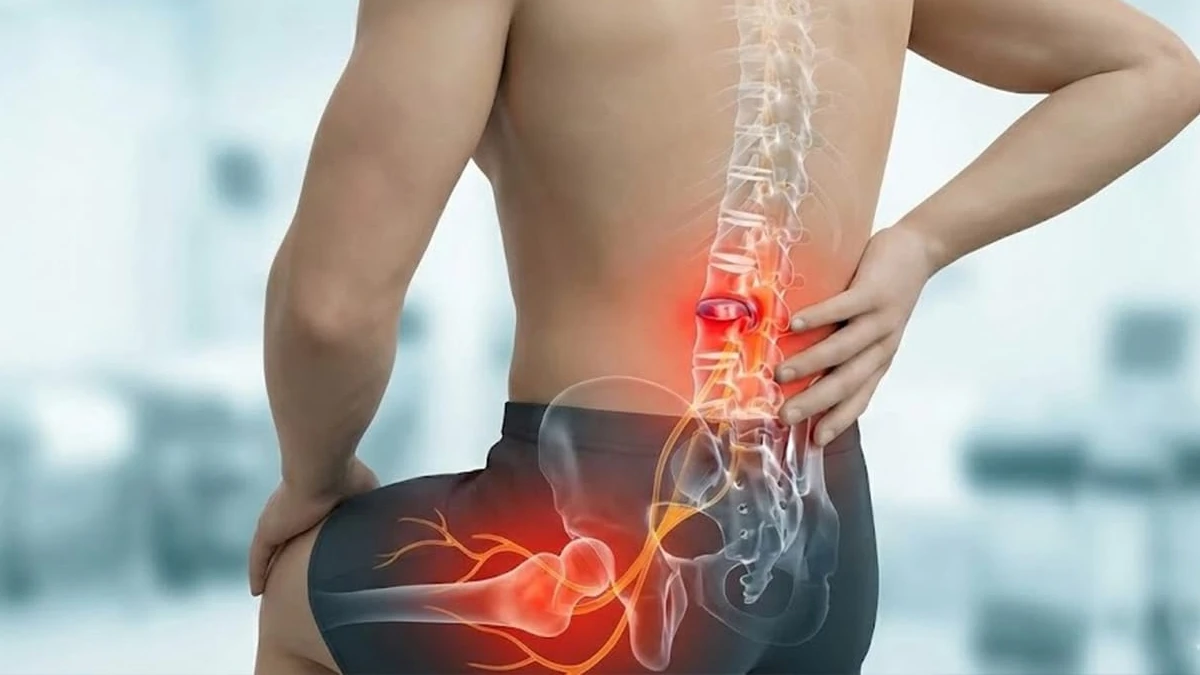
Between the vertebrae of the lower back sit discs that act as cushions. When the sound outer ring of the disc wears or tears, the gel-like nucleus inside it protrudes outwards. This is called a disc herniation, known in everyday language as a slipped disc.
If the protruding tissue presses on a nerve root leaving the spinal cord, pain and numbness appear in the region that nerve supplies. Because the nerves leaving the lower back travel to the buttock and leg, the complaint is most often felt not in the back but in the leg.
Some degree of wear in the discs is seen in everyone with age. What is decisive is not whether a herniation is detected on imaging, but whether that herniation is pressing on a nerve and whether it is producing complaints in the individual.
What are the symptoms of a lumbar disc herniation?
The symptoms vary according to the nerve root affected. The most common are:
- Pain radiating into the leg: Pain descending from the buttock into the leg and at times as far as the foot. When it arises from a nerve root it is also called sciatic pain.
- Numbness and tingling: In a particular region of the leg or in the toes.
- Loss of strength: Difficulty lifting the ankle upwards, inability to rise onto the toes.
- Pain that increases with coughing and straining: Movements that raise intra-abdominal pressure can make the complaint more pronounced.
Not every kind of back pain means a herniation. Muscular pain, facet joint problems and postural disorders can create similar complaints; the distinction is made by examination.
How is the diagnosis made?
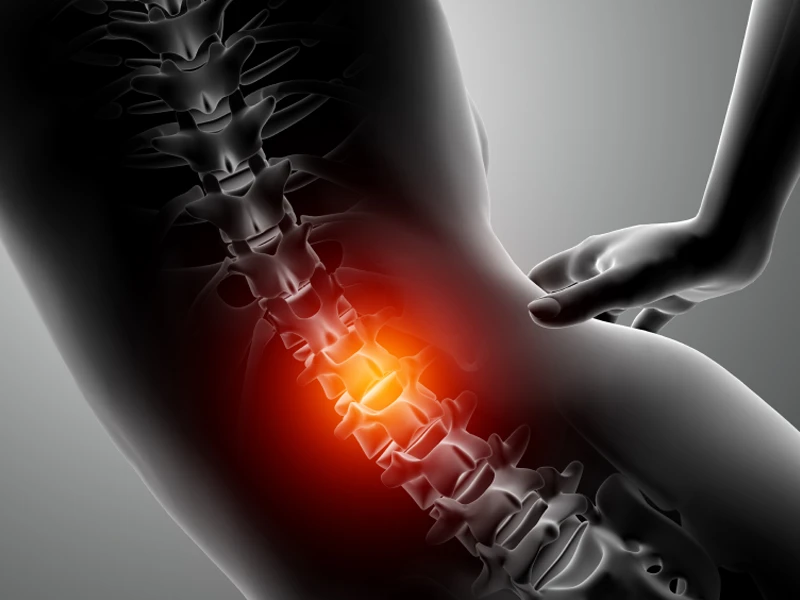
Assessment begins with the history and physical examination. Where the pain radiates, which movement aggravates it, the straight leg raise test, reflexes, sensation and muscle strength are examined. These findings give direction as to which nerve root is affected.
Imaging is used to confirm the examination. X-ray shows the alignment of the vertebrae and the bony structure; MRI sets out the disc, nerve and soft tissue in detail.
It matters that the imaging finding and the examination finding coincide. If the two do not agree, the source of the pain may lie in another structure.
Non-surgical options in the treatment of lumbar disc herniation
A significant proportion of lumbar disc herniation cases can be brought under control without surgery. The main approaches:
- Activity modification: Temporarily limiting movements that increase the pain; prolonged bed rest is not recommended.
- Physiotherapy and exercise: Strengthening the trunk and abdominal muscles and preserving range of motion.
- Medication: Directed at reducing pain and inflammation, on the recommendation of a physician and for a limited period.
- Interventional procedures: In selected cases, injections directed at the source of the pain may be considered.
These options are not alternatives to one another but a plan carried out together. The response is reviewed at regular intervals.
When is surgery for a lumbar disc herniation required?
Surgery is not the first option. It generally comes onto the agenda in the following situations:
- An inadequate response to non-surgical treatment, with the complaint continuing to restrict daily life
- Progressive loss of strength
- Pain accompanied by disturbance of bladder or bowel control
The decision is made not on a single finding but by looking at the examination, the imaging and the whole of the restriction in the person's daily life.
Examination and treatment process
-
History and physical examination
The spread of the pain, its duration and the movements that aggravate it; reflexes, sensation, muscle strength and stretch tests are assessed.
-
Imaging
Vertebral alignment is examined with X-ray and, where necessary, the disc and nerve tissue with MRI.
-
Treatment plan
Non-surgical options are prioritised; if surgery is required it is discussed together with the reasons for it.
-
Follow-up
The response is assessed regularly; the exercise and activity plan is updated.
Frequently asked questions
Can a lumbar disc herniation resolve without surgery?
Why does a lumbar disc herniation cause pain that strikes into the leg?
Is surgery for a lumbar disc herniation risky?
Does bed rest help with a lumbar disc herniation?
Are a lumbar disc herniation and spondylolisthesis the same thing?
Which department should I go to for back pain?

Treating physician
Prof. Dr. Melih Malkoç
Specialist in Orthopaedics and Traumatology. Graduate of Ege University Faculty of Medicine; completed his specialist training at Şişli Etfal Training and Research Hospital and received the title of associate professor in 2015.
Full biography →The information on this page is for general guidance only and does not replace a diagnosis or treatment recommendation. Diagnosis and treatment decisions are made by the physician on an individual basis following examination and imaging.