
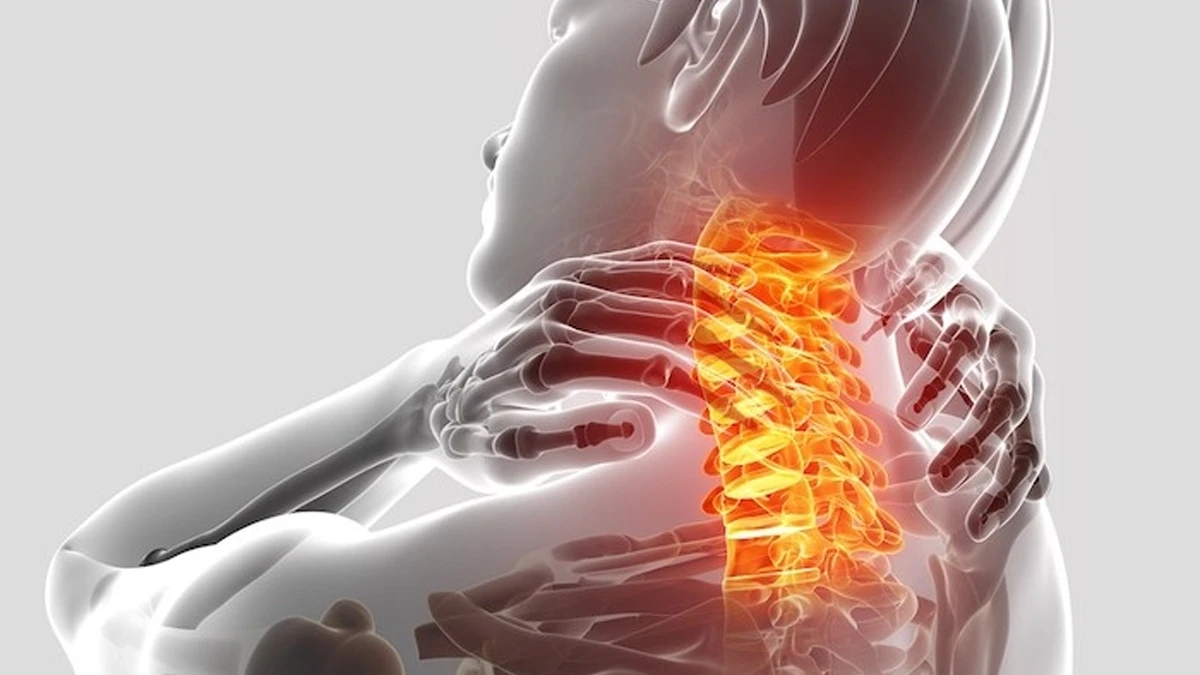
What is a cervical disc herniation?
Between the vertebrae of the neck sit discs that act as cushions for the vertebrae. Each disc has a sound outer ring and a gel-like nucleus inside it. When this ring wears or tears, the inner part protrudes outwards; this is called a disc herniation, known in everyday language as a slipped disc in the neck.
If the protruding tissue presses on a nerve root leaving the spinal cord, pain, numbness or loss of strength appears in the region that nerve supplies. Because the nerves leaving the neck travel to the arm and the fingers, the complaint is most often felt not in the neck but in the arm.
Some degree of wear in the discs is seen in everyone with age. What matters is not whether a herniation is detected on imaging, but whether that herniation is pressing on a nerve and whether it is producing complaints in the individual.
What are the symptoms of a cervical disc herniation?
The symptoms vary according to which nerve root is affected. The most common are:
- Pain radiating into the arm: Pain descending from the neck to the shoulder and on into the arm and fingers, at times described as an electric shock.
- Numbness and tingling: Usually in the fingers, confined to a particular region.
- Loss of strength: Reduced grip strength, difficulty raising the arm.
- Pain that increases with neck movement: Lifting the head upwards or turning it towards the affected side can increase the complaint.
Not every kind of neck pain means a herniation. Muscular pain, postural disorders and joint-related problems can create similar complaints; the distinction is made by examination.
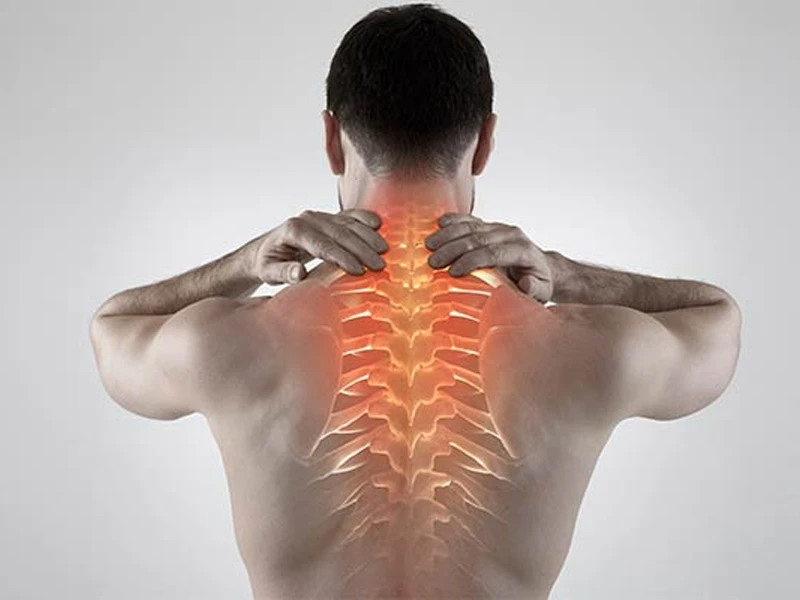
How is the diagnosis made?
The basis of the diagnosis is the history and physical examination. Where the pain radiates, which movement aggravates it, the reflexes, sensation and muscle strength are assessed. These findings give direction as to which nerve root is affected.
Imaging is used to confirm this assessment. X-ray shows the bony structure and the space between the vertebrae; MRI sets out the disc, nerve and soft tissue in detail. Nerve conduction studies may be requested where necessary.
It matters that the imaging finding and the examination finding coincide. If the two do not agree, the source of the complaint may lie elsewhere.
Non-surgical treatment options
A significant proportion of cervical disc herniation cases can be brought under control without surgery. The main approaches used in this process:
- Activity modification: Temporarily limiting postures and movements that increase the pain, and reviewing the working environment.
- Physiotherapy and exercise: Strengthening the muscles around the neck and shoulder and preserving range of motion.
- Medication: Directed at reducing pain and inflammation, on the recommendation of a physician and for a limited period.
- Interventional procedures: In selected cases, injections directed at the source of the pain may come onto the agenda.
These options are not alternatives to one another but, most of the time, a plan carried out together. Regenerative methods directed at joint and soft tissue may also be considered at this stage. The response is reviewed at regular intervals and the plan updated accordingly.
When does surgery come onto the agenda?
Surgery is not the first option in cervical disc herniation. It is generally considered in the following situations:
- An inadequate response to non-surgical treatment, with the complaint continuing to restrict daily life
- Progressive loss of strength
- The appearance of findings indicating pressure on the spinal cord
The decision is made not on a single finding but by looking at the examination, the imaging and the whole of the restriction in the person's daily life. The same MRI image may call for a different route in two different patients.
Examination and treatment process
-
History and physical examination
The spread of the pain, its duration, the movements that aggravate and relieve it; reflexes, sensation and muscle strength are assessed.
-
Imaging
The bony structure is examined with X-ray and, where necessary, the disc and nerve tissue with MRI.
-
Treatment plan
Non-surgical options are prioritised; if surgery is required it is discussed together with the reasons for it.
-
Follow-up
The response is assessed at set intervals and the exercise and activity plan is updated.
Frequently asked questions
Can a cervical disc herniation resolve without surgery?
Why does a cervical disc herniation cause pain that strikes into the arm?
I had an MRI and it showed a cervical disc herniation. Do I need surgery?
Which movements should I avoid with a cervical disc herniation?
Are a cervical disc herniation and loss of cervical curvature the same thing?
Which department should I go to for neck pain?

Treating physician
Prof. Dr. Melih Malkoç
Specialist in Orthopaedics and Traumatology. Graduate of Ege University Faculty of Medicine; completed his specialist training at Şişli Etfal Training and Research Hospital and received the title of associate professor in 2015.
Full biography →The information on this page is for general guidance only and does not replace a diagnosis or treatment recommendation. Diagnosis and treatment decisions are made by the physician on an individual basis following examination and imaging.