
What is sciatica?
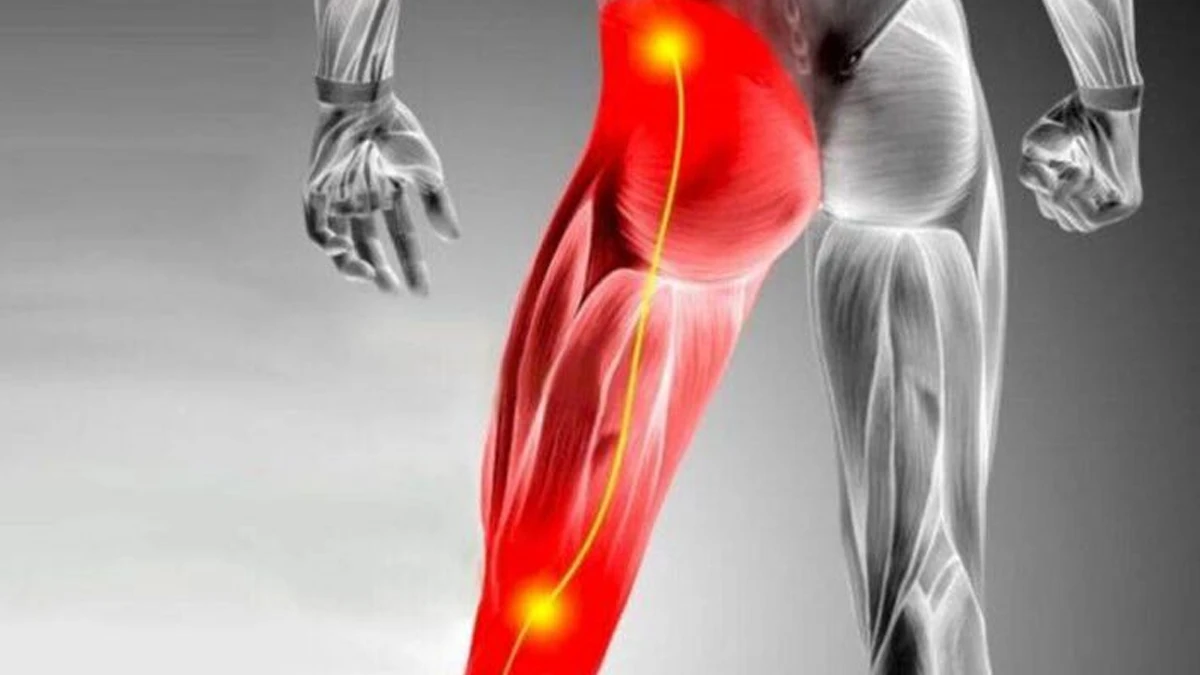
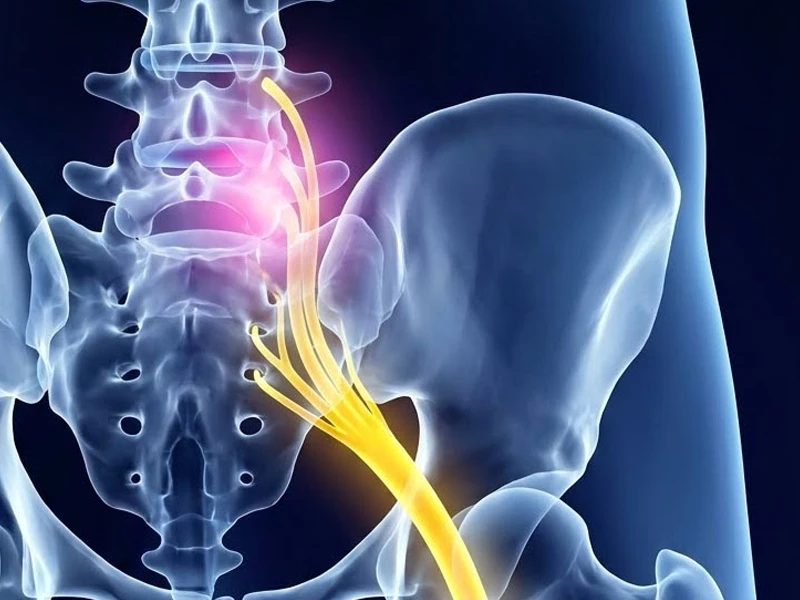
The sciatic nerve is formed where several nerve roots in the lower back join together. It passes through the buttock, runs down the back of the leg and reaches the foot. It is the longest and thickest nerve in the body.
When pressure or irritation occurs at any point along this nerve path, the pain spreads throughout the region the nerve supplies. Patients most often describe the pain not in the lower back but in the buttock and the back of the leg.
Sciatica is not a disease in its own right; it is a symptom. The treatment plan is built after establishing what is causing the pain.
Causes of sciatic pain
The main sources of pain felt along the sciatic path:
- Lumbar disc herniation: The most frequently encountered cause. The protruding disc presses on one of the nerve roots that form the sciatic nerve. For detail, see the lumbar disc herniation page.
- Narrowing of the spinal canal: With age the canal may narrow and leave insufficient room for the nerves.
- Spondylolisthesis: Forward slippage of a vertebra can narrow the opening the nerve exits through.
- Muscular problems around the hip: Compression of the nerve between muscles in the buttock region.
- Joint-related problems: Pain arising from the facet joints and the sacroiliac joint can radiate in a similar pattern.
These causes are distinguished by examination and, where necessary, imaging. Treatment is shaped according to the source of the pain.
What are the symptoms of sciatica?
Sciatic pain differs from other forms of back pain in several ways:
- The pain radiates from the lower back to the buttock and on to the back of the leg
- It is usually one-sided
- It is described as an electric shock or a burning sensation
- It increases with prolonged sitting, coughing or straining
- Numbness, tingling or loss of strength in the leg may accompany it
How far down the pain travels gives information about which nerve root is affected. For this reason the pattern in which the pain spreads is questioned in detail during the examination.
What is done in the treatment of sciatica?
Treatment is planned according to the cause of the pain. Non-surgical options come first in most cases:
- Activity modification: Temporarily limiting movements that increase the pain, while avoiding prolonged inactivity.
- Physiotherapy and exercise: Strengthening the trunk muscles and reducing tension on the nerve.
- Medication: Directed at pain and inflammation, on the recommendation of a physician.
- Interventional procedures: Injections directed around the nerve root in selected cases. Regenerative methods may be considered where accompanying joint problems are present.
Surgery comes onto the agenda in cases of progressive loss of strength, intolerable pain, or a lack of response to non-surgical treatment.
Examination and treatment process
-
History and physical examination
The pattern in which the pain spreads, its duration and the movements that aggravate it; stretch tests, reflexes, sensation and muscle strength are assessed.
-
Identifying the source
Where necessary, the lower back is examined with X-ray and MRI, and the source of the pain is clarified.
-
Treatment plan
A non-surgical plan addressing the cause is put in place; surgery is considered in cases that do not respond.
-
Follow-up
Pain and function are measured at regular intervals and the plan is updated accordingly.
Frequently asked questions
How many days does sciatic pain take to pass?
Is walking harmful when you have sciatic pain?
Is sciatica always caused by a lumbar disc herniation?
Does sciatica require surgery?
I have numbness in both legs — what should I do?
Which department should I go to for sciatica?

Treating physician
Prof. Dr. Melih Malkoç
Specialist in Orthopaedics and Traumatology. Graduate of Ege University Faculty of Medicine; completed his specialist training at Şişli Etfal Training and Research Hospital and received the title of associate professor in 2015.
Full biography →The information on this page is for general guidance only and does not replace a diagnosis or treatment recommendation. Diagnosis and treatment decisions are made by the physician on an individual basis following examination and imaging.