
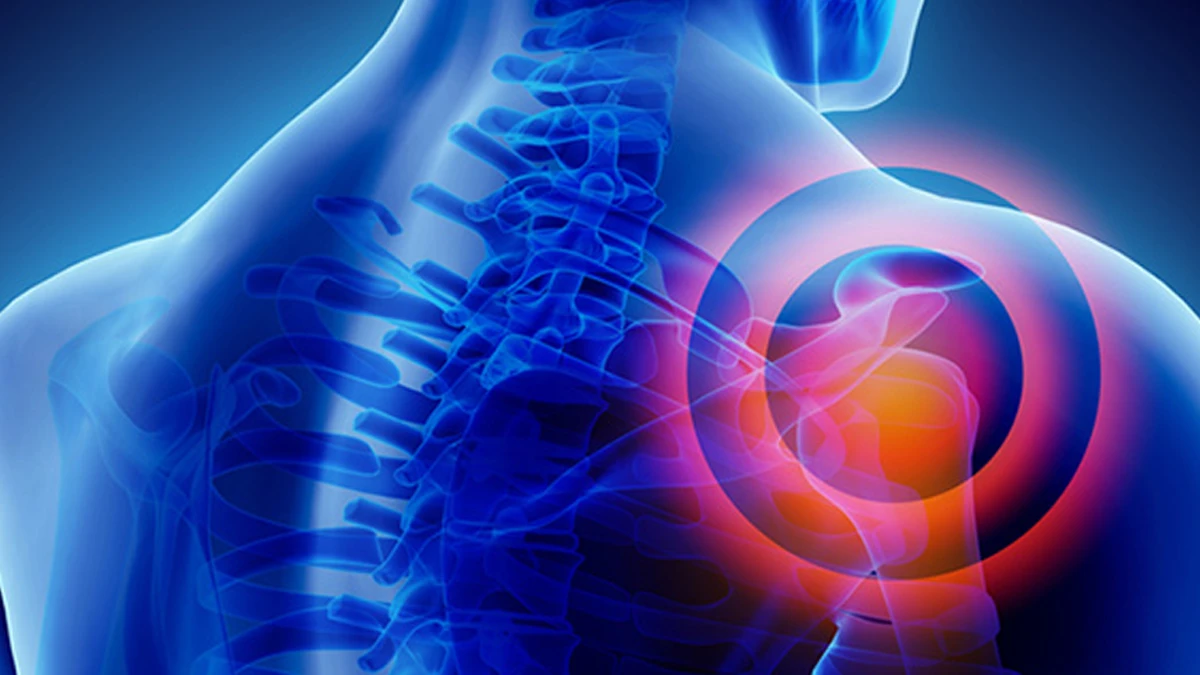
Where does shoulder pain come from?
The shoulder is formed by a shallow socket on the shoulder blade and the head of the arm bone. The shallowness of the socket allows a wide range of movement, but leaves stability to the surrounding muscles, tendons and ligaments. For this reason most shoulder problems arise not from bone but from soft tissue.
The most frequently encountered sources:
- Rotator cuff problems: Impingement, wear or tearing in the tendons of the four muscles that surround the shoulder.
- Impingement syndrome: Compression of the tendons beneath a bony prominence.
- Frozen shoulder: Thickening and stiffening of the joint capsule with restriction of movement.
- Instability: A tendency for the joint to come out of place; usually after a dislocation or with ligament laxity.
- Osteoarthritis: Wear of the joint surface; seen less often in the shoulder than in the knee and hip.
Pain originating in the neck can also be referred to the shoulder; see cervical disc herniation.
Rotator cuff tears
The rotator cuff is the structure formed by the tendons of the four muscles that surround the shoulder and hold the head of the arm bone in its socket. Most movements of raising and rotating the arm take place through these tendons.
Tears arise in two ways:
- Wear-related tear: The result of thinning of the tendon with age and repeated strain. It can develop without any obvious accident.
- Traumatic tear: The result of a fall or sudden strain; usually in younger people and of sudden onset.
Typical complaints are difficulty raising the arm above shoulder level, night pain and being unable to lie on that shoulder. Not every tear requires surgery; the size and location of the tear, the person's age and their activity expectations are assessed together.
Frozen shoulder (adhesive capsulitis)
In frozen shoulder the capsule surrounding the joint thickens and contracts; the shoulder becomes both painful and restricted in movement. Not only can the patient not raise their arm, but nor can someone else raise it for them — an important finding that distinguishes it from a rotator cuff tear.
The process generally follows three phases: a phase in which pain comes to the fore, a phase in which movement is markedly restricted, and a phase in which movement gradually returns.
Treatment is predominantly non-surgical: an exercise programme that preserves range of motion, physiotherapy and, in selected cases, intra-articular procedures. Surgery is considered in cases that fail to respond over a long period.
Treatment options and where surgery fits in
A significant proportion of shoulder problems can be managed without surgery:
- Activity modification: Temporarily limiting overhead work and movements that increase the pain.
- Physiotherapy and exercise: Shoulder blade control and strengthening of the rotator cuff muscles; this is the foundation of shoulder treatment.
- Medication and intra-articular procedures: Directed at reducing pain and inflammation; regenerative methods may be considered in selected cases.
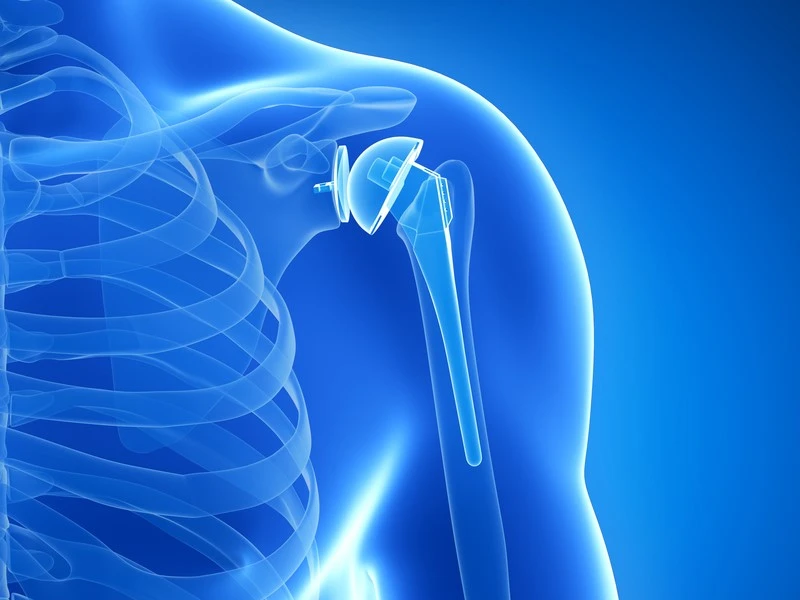
Surgery comes onto the agenda in pain unresponsive to non-surgical treatment, full-thickness tears causing loss of function, recurrent dislocations and advanced joint damage. A significant proportion of procedures are carried out arthroscopically, by the closed method.
Examination and treatment process
-
History and physical examination
Active and passive range of motion, strength tests and impingement tests are assessed; pain originating in the neck is distinguished.
-
Imaging
The bony structure is examined with X-ray and, where necessary, the tendons, capsule and cartilage with MRI.
-
Treatment plan
A non-surgical plan based on physiotherapy is put in place; if surgery is required it is discussed together with the reasons for it.
-
Follow-up
Range of motion and strength are measured regularly and the exercise programme is updated.
Frequently asked questions
Can a rotator cuff tear heal without surgery?
How long does frozen shoulder last?
My shoulder hurts at night and I cannot lie on it. Why?
Can shoulder pain originate in the neck?
Can shoulder operations be carried out by the closed method?
Which department should I go to for shoulder pain?
Treating physician
Prof. Dr. Melih Malkoç
Specialist in Orthopaedics and Traumatology. Graduate of Ege University Faculty of Medicine; completed his specialist training at Şişli Etfal Training and Research Hospital and received the title of associate professor in 2015.
Full biography →The information on this page is for general guidance only and does not replace a diagnosis or treatment recommendation. Diagnosis and treatment decisions are made by the physician on an individual basis following examination and imaging.